The Top 500 Podcast Search Terms On YouTube

YouTube recently announced its release of YouTube Podcasts, which is Google’s 4th attempt to really break into the podcasting space in a meaningful way. For a company devoted to organizing the world’s knowledge, it is surprising to many of us in the content marketing field that Google has struggled so much with getting a podcasting channel to really work well.
According to a TechCrunch article, a YouTube spokesperson mentioned
“The podcast destination page on YouTube helps users explore new and popular podcast episodes, shows and creators, as well as recommend podcast content. It’s currently available in the U.S. only.”
Paul Pennigton
This appears to be the middle part of a planned phased rollout by YouTube, with Podnews first reporting on YouTube’s plans around podcasting back in March 2002.
So we decided to look at what the data says about how people search YouTube to interact with podcast-related content.
But first, why should podcasters care about YouTube?
One of the biggest struggles for podcasters is how they can consistently find more listeners. How can podcasters get in front of potential new listeners and let their content speak for itself?
This is the dream of many a content creator.
And podcasting arguably just makes this more difficult than centralized platforms like YouTube or most social media platforms.
Podcast directories like Apple Podcasts have historically been pretty bad at discovery. Spotify (loved or hated in the podcasting industry) does a better job at discoverability because it is more of a closed ecosystem, and has more data about you as a listener, which allows it to create better suggestions, playlists, and channels.
YouTube Podcasts would definitely fit into the latter category. YouTube itself is one of the more insulated content channels out there.
Creators like Mr. Beast have made their millions mostly on YouTube alone, without the complexities of a separate website, email list, products to sell, etc.
And the optimist in me says that creators having their podcasts on YouTube could provide that edge in discoverability that so many of us podcasters are looking for.
Additionally, at this point YouTube does appear to be working with conventional RSS feed technology, deviating from Spotify’s closed ecosystem model for the time being.
Audio Or Video First On YouTube?
One interesting question that content creators will have to answer soon is whether they will continue to be an audio-first medium or become a video-first creator.
Traditionally “most” podcasters have been audio first, leaving video to be an afterthought. Our YouTube Republishing was designed with this use case in mind, in fact.
But more and more we have seen that savvy content creators are going video-first to produce rich video content, mostly for YouTube and social media channels, with audio for a podcast to be somewhat of an afterthought.
An aspect of this has to come down to the difficulty of producing high-quality video. On our YouTube channel Matt from our team puts a TON of time into each episode. Easily 5x the amount of work that goes into a podcast episode. All brands will need to gauge whether that amount of effort is justified.
Podcast Search Data On YouTube
Thanks to our friends at Ahrefs we gathered a list of the 500 most popular podcast search terms on YouTube.
To narrow down just to podcast-related searches we pulled a list of all searches with the term podcast in them. We’ll talk about the potential implications of this approach shortly.
Regardless, we think the results are quite interesting:
The search volumes shown above are for the last 12 months.
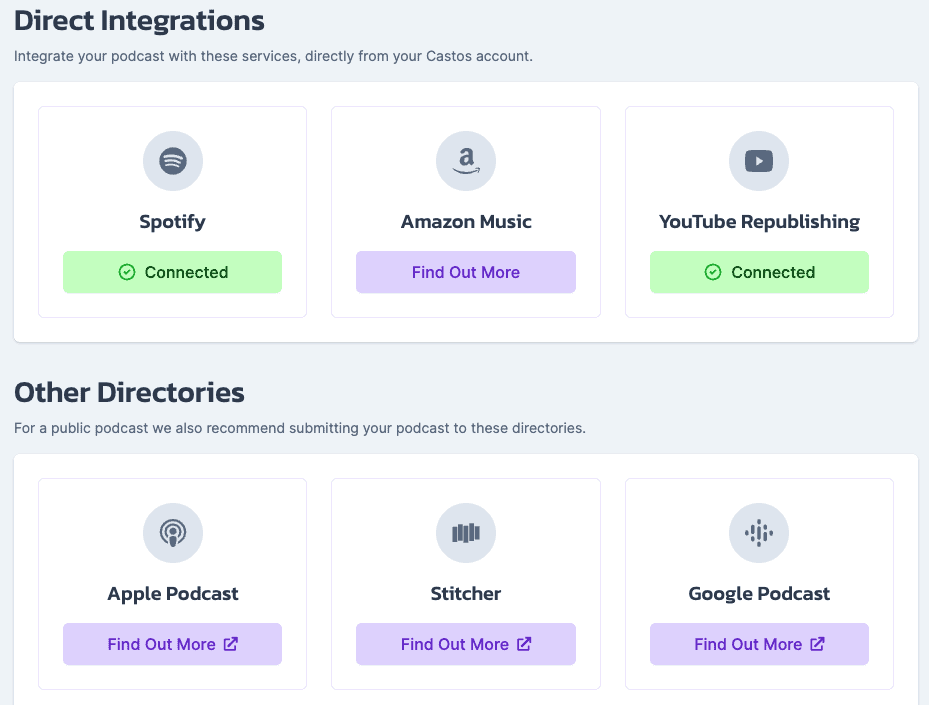
Automatically publish your episodes to dozens of podcast directories
With Castos you can send all of your podcast content directly to directories like Apple Podcasts, Spotify, Amazon Music, Stitcher, Google Podcasts, and many others.
Meet your audience where they already listen to podcasts!
What Does The Data Tell Us?
Most search terms are for shows, not “how to” content
What struck me initially is how virtually all of these search terms are for actual podcasts, and not for How To podcast terms or Best Of category searches.
Many of us use YouTube to learn how to do things, but podcasting seems to buck the trend there with the majority of the search terms being for the actual content, and not educational material.
This would lead you to think that platform-wide YouTube is a discovery opportunity, which is great news for most podcasters.
There are very few similar requests
As you’ll see from the list above there are not a lot of similar keywords being requested. We did not clean up this dataset and de-duplicate the list at all. These are the raw, top 500 search terms on YouTube according to Ahrefs that include the term podcast.
The Search Volume Is High
There is just way more search volume than we expected. How annual search volume compares to channel subscriptions is a question we’re still trying to understand, but it could provide a leading indicator to creators who are looking at how often their brand is searched for on YouTube.
U.S. vs. Global Volume
Podcasting has had higher adoption in the US versus any overseas regions, and the data here supports that. However, it is a reminder that there are very large audiences outside the US that creators should be thinking about when tailoring their messaging, episode content, and community-building approaches.
YouTube vs. Google Search Volumes
In order to put this YouTube search data in context, we wanted to compare the search volumes on YouTube to general Google web searches for the same terms.
Again using Ahrefs for our data source to keep the comparison as similar as possible we’ve correlated the following for the top 100 podcast search terms from YouTube and their corresponding Google Search (worldwide) volumes:
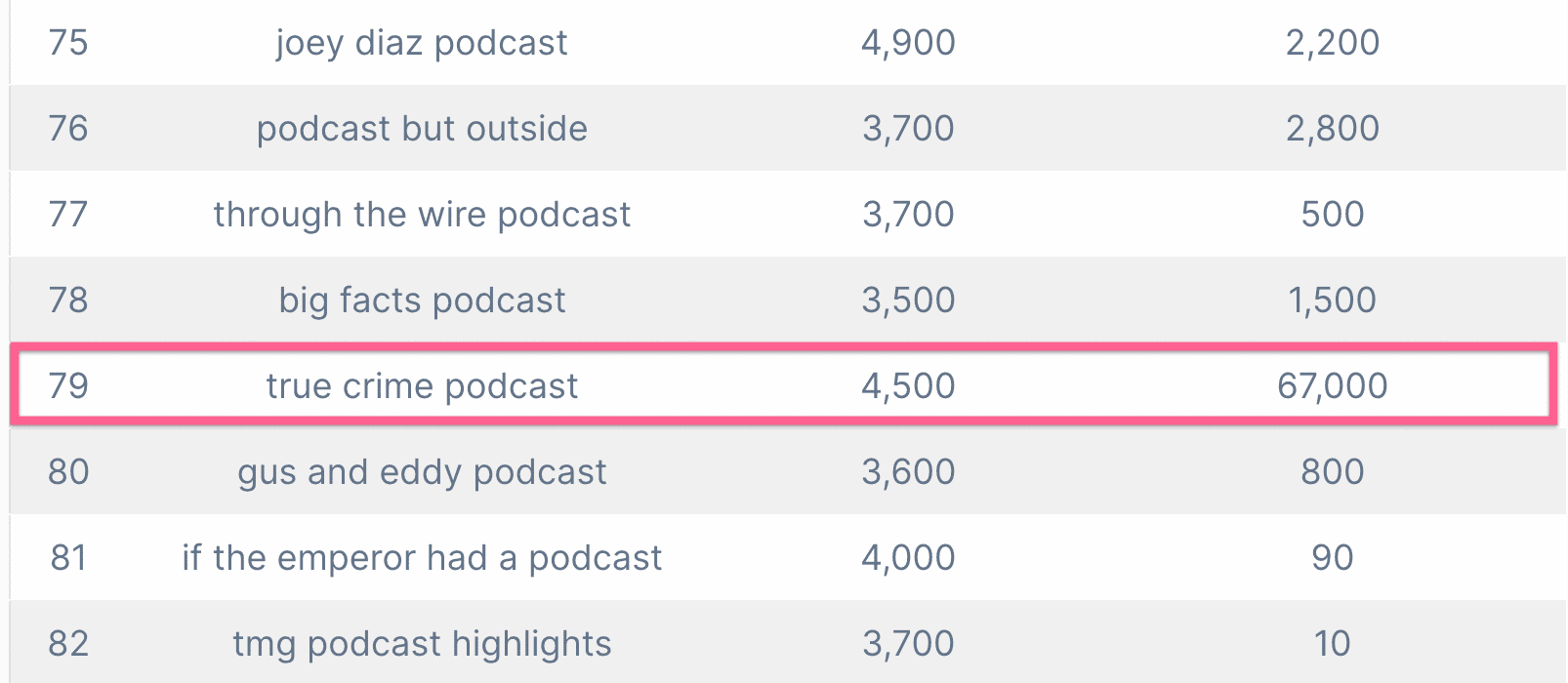
There are many stark differences here with brand names having much higher search volumes on YouTube than on Google.
Conversely, How To topics and “Best of” category searches (like True Crime below) on Google far outpaced their YouTube counterparts.
Limitations
There are a few things to keep in mind with this data when thinking about your podcast and its searchability on YouTube vs. Google
- We used the same data source for both data sets, but could be inaccurate. Ahrefs is the industry standard when it comes to search, but it is still a proxy for Google’s own data, which we don’t have access to.
- I chose to use the term
podcastas a primary keyword selector, but some (many?) don’t use the word “Podcast” in their show title. In this regard, I believe this would have eliminated some podcasts with the word Show or Radio in their name from the YouTube results that could have otherwise ranked high in the results. - This data does not consider things like playlists or recommendations when it comes to YouTube consumption habits. Indeed this is not attempting to report on playback time or visibility at all, just the search intent of users.
Your Impressions
What do you see from this data, or what is not here that you’re curious about? We’d love to continue this discussion below in the comments. Drop in a message and let us know what you’re thinking.
Launch Your Podcast In Minutes
Castos makes launching simple with one-click setup, automatic distribution to all platforms, and professional hosting. No technical skills required.
Start your 14-day free trial